
The biggest games ever
Previewing the FIFA World Cup Inter-Confederation play-offs

It’s all too often a football match is labelled Team X’s biggest game of the season, the biggest game in a generation, or in history. Case in point; Tottenham Hotspur’s recent home game against Crystal Palace was said to be their biggest ever Premier League game, that was until the moniker was passed onto last weekend’s game against Nottingham Forest, and surely will be again to whomever they play next. Of course, if you keep losing — or winning — the games keep getting bigger and bigger until there are none left. That’s sport.
A real rarity, meanwhile, is for six national teams all to converge on one country, with little doubt that all are about to play their biggest games if not ever, then certainly for a generation.
This week, the Inter-Confederation play-offs for the 2026 FIFA World Cup take place in Mexico, featuring six teams, from five confederations, all fighting for two places at North America’s showpiece this summer in a mini-tournament not seen before in World Cup qualifying. All six sides have fairy tale credentials, two have never played at the World Cup and none of the other four have qualified this Millennium. Here’s The Full International’s preview.
Bolivia vs Suriname
Pathway 2 semi-final - Thursday 26th March, 17:00 local time
Two teams on the South American continent who are not only part of different confederations, but have never met, despite being just one Brazil away! In fact, Suriname will be playing their first game against CONMEBOL opposition this century.
Bolivia — For those who know their World Cup history, Bolivia was synonymous with the term ‘whipping boys’ in the earlier editions. They lost two out of two in 1930, then one out of one in 1950, leaving both Uruguay and Brazil with a record of scored zero, conceded eight. Since then, we have only seen them at the 1994 edition, where they gallantly lost 1-0 to Germany before getting a first-ever World Cup point in a goalless draw with South Korea. La Verde then excelled themselves by scoring their first World Cup goal at the sixth attempt, albeit in a 3-1 defeat to Spain.
Qualification campaigns over the past 28 years had never garnered more than four wins, until their 2026 campaign, where six wins and two draws was enough to finish seventh and take the play-off place. To detract from the abilities of Óscar Villegas and his squad may be unfair, but it cannot be ignored that the upturn in form was partly down to moving home games from La Paz to El Alto. Following one win and two losses in the capital, Bolivia earned 14 points from a possible 18 in the city 4,000m above sea level, while their away form in comparison was dreadful.
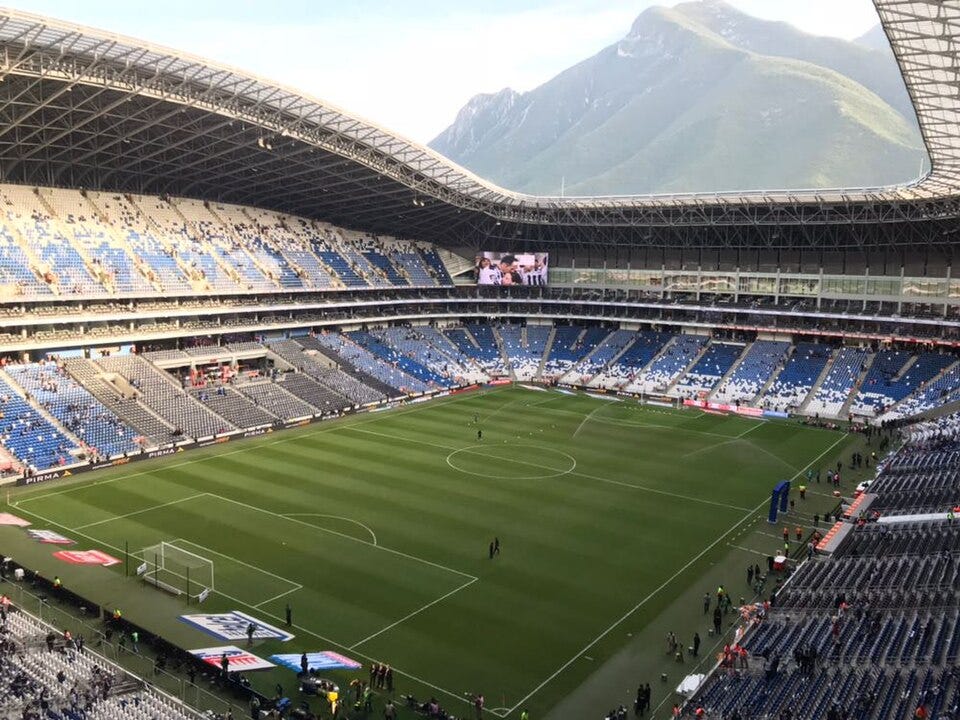
Estadio BBVA in Monterrey is merely 500m in the air, not nearly enough to give the Bolivians the advantage. They warmed up with a 3-0 friendly win over Trinidad & Tobago, but no win outside their homeland since a 1-0 success over Andorra in Algeria in March 2024 is a huge concern.
Biggest game… since June 1994.
Suriname — Ask the average football fan to name the best players from Suriname and they will struggle. Ask them to wax lyrical about Edgar Davids, Clarence Seedorf or Jimmy Floyd Hasselbaink, they will find it easier. All three were born in Suriname’s capital, Paramaribo, and are just a handful of Suriname-born players to turn out for the Netherlands, while Ruud Gullit, Frank Rijkaard, Patrick Kluivert and Virgil van Dijk are among the many more born in the country they went on to represent, despite Surinamese heritage.
As we have seen with Curaçao and Indonesia during this qualification campaign, the Dutch-Surinamese shoe is now somewhat on the other foot. Of the 26 players called-up for these play-offs by Dutch head coach Henk ten Cate, 22 were born in the Netherlands, one in Belgium and just three in Suriname.
Having previously lost all their best talent to their former colonial power, Suriname are now harnessing that power to the fullest effect. The Green Guardians had seldom got anywhere in qualifying for the World Cup, often eliminated in the early rounds of the CONCACAF system, but this time they did just enough — really, just enough. A 93rd-minute own goal in a 3-1 loss to Guatemala ensured they beat Honduras to the second-best runner-up place in the Third Round on goals scored.
They will need just a second victory in 11 games, against a side ranked 47 places higher, in order to reach the final, but with a squad playing regularly in the better European leagues and Bolivia’s awful travel record, Suriname have every chance.
Biggest game… ever.
Iraq vs the winner of Bolivia/Suriname
Pathway 2 final - Tuesday 31st March, 21:00 local time
Iraq — As mentioned in my previous article, Iraq’s preparations for their play-off final have been seriously impacted.

Sadly for head coach Graham Arnold, his request to postpone the final has fallen on deaf ears. He has managed to gather a competitive squad for the upcoming match, but with many experienced home-based players unable to travel to Mexico, it is fair to say this is not the squad that got Iraq to this stage. Furthermore, a handful of players brought to North America are struggling with fitness issues.
Exactly what kind of Iraq will take to the field on 31st March, what kind of state they will be in — both physically and mentally — is difficult to say. What we can say, though, is that The Lions of Mesopotamia will give everything. Mexico is where Iraq played their one and only World Cup to date, 40 years ago, losing all three group games by the odd goal to Paraguay, Belgium and the hosts. The chance to write a new, positive chapter in their history amid the current political backdrop, would be a story worthy of any side in these play-offs.
They have lost their last two after going nine unbeaten and sit 58th in the rankings, two facts that should be taken with a pinch of salt considering their build-up.
Biggest game… since their 2007 Asian Cup final victory, if not since June 1986.
New Caledonia vs Jamaica
Pathway 1 semi-final - Thursday 26th March, 20:00 local time
Perhaps less surprisingly, this semi-final also features two teams who have never faced each other before!
New Caledonia — I shouldn’t have to explain why a French territory in the Pacific Ocean, home to 265,000 people, qualifying for the World Cup would be a big story. The bigger test is trying to explain how and why New Caledonia cannot be completely discounted against Jamaica, even with their clear rank-outsiders tag.
Before the expansion to 48 teams, the team finishing first in OFC qualifying wasn’t guaranteed a place at the finals. Finish second? Forget it. But now, the runners-up to New Zealand are still in the race. After dispatching former continental champions Tahiti 3-0 in their semi-final, Les Cagous then lost by the same score to the All Whites — hardly a disgraceful score against a side ranked 65 places higher, who had home advantage, yet failed to break the deadlock until the hour mark.
150th in the world, New Caledonia have improved significantly from qualification for Qatar, by far their worst attempt of their previous five, where they lost all three games including 7-1 to New Zealand on neutral territory. They have also been boosted by former France under-21 international Angelo Fulgini switching allegiance in time for the play-offs. Fulgini, of Saudi Pro League club Al-Taawoun, has played in Ligue 1 and the Bundesliga, and will be making his debut alongside players based in the lower leagues of France and Israel as well as Oceania-based players.

Since the loss to New Zealand, they have beaten Gibraltar 2-0 — not such an easy task, as some European sides have discovered of late — and won a friendly against a French club team. Hardly the most impressive of victories, but a win is a win!
Biggest game… ever.
Jamaica — The draw has been kind to the Reggae Boyz, but they cannot afford to be complacent. The draw for CONCACAF’s Third Round appeared to be kind to Steve McLaren’s side, but costly draws to Trinidad & Tobago and Curaçao in their final two games saw them slip out of top spot and into the play-offs.
McLaren resigning despite not being eliminated was bad news for meme makers around the world, and has seen Rudolph Speid take interim charge. Jamaica have faith in a man who has neither played nor coached outside the country, but it’s hardly an ideal situation ahead of a high-pressure match that the side will be expected to win well.
Ranked 80 places above their opponents, Jamaica have called upon a squad that should be able to stroll past the New Caledonians despite the recent turmoil in the dugout. The majority of the squad plays in England, though only two players turn out for Premier League clubs. Unlike Suriname, calling up those born in the country of the old empire is nothing new for Jamaica, who used the diaspora in their only World Cup to date, France 1998, where they fell to Croatia and Argentina, before bowing out with a 2-1 success over Japan.
Biggest game… since June 1998.
DR Congo vs the winner of New Caledonia/Jamaica
Pathway 1 final - Tuesday 31st March, 15:00 local time
DR Congo — Waiting in Guadalajara for the winner of the islanders’ semi-final will be Africa’s representative, Democratic Republic of Congo, who were a penalty shootout away from taking the continent’s final automatic place, losing out to Nigeria having already seen off another powerhouse, Cameroon.
Counting that loss on penalties as a draw, DR Congo went unbeaten in their final eight matches of 2025, before losing 1-0 to Algeria in the Round of 16 of the recent Africa Cup of Nations, their only match of 2026 so far. As the old saying goes, you’re only as good as your last game, though they will have the chance to brush off some cobwebs with a friendly against Bermuda the day before New Caledonia and Jamaica meet.
Les Léopards are the only team at this play-off tournament not to name a player from their domestic league. Instead, Sébastien Desabre’s squad are scattered throughout Europe, with a few plying their trade in North Africa and the Middle East. 12 of the 27 selected play in Europe’s top five leagues, giving the Congolese a certain star power that befits their place inside the top 50 in the rankings.
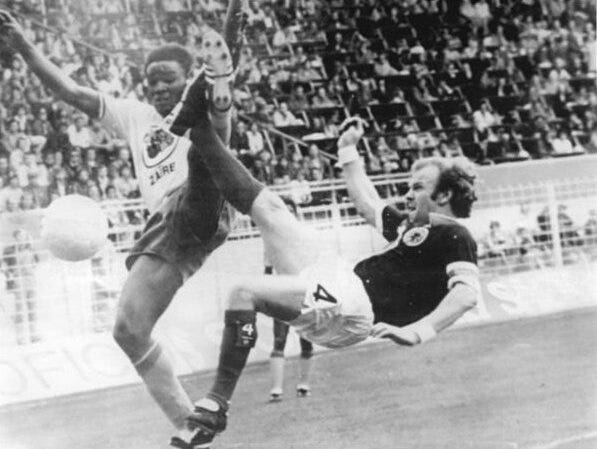
This generation has the potential to be the one that finally gives the country a positive association with the World Cup. In 1974, as Zaire, desperate players fearing the harshest of punishments from the oppressive regime back home were ridiculed for “not knowing the rules” by an ignorant international media.
Biggest game… since June 1974.
So, who is going to the World Cup? I believe DR Congo will have too much strength in depth against a Jamaica team with less rest and an inexperienced coach. Suriname have the ability to beat poor travellers Bolivia, and given there is no way of knowing how Iraq will perform, I guess I have to stick with them to go all the way!
Thank you for reading this free edition of The Full International! To support the writer, Anthony Tomas, please consider buying him a coffee… he needs it!